
Get Paid Faster with ProperFile Payments, Powered by LawPay
Process credit card and electronic check payments without leaving ProperFile. Payments are powered by LawPay, so every transaction is fast, convenient, and PCI compliant, with no equipment required.
- Accept credit card or electronic check (ACH) payments online
- Connect your LawPay account through the Administration Portal in under 2 minutes
- Process payments manually, or email an invoice, without leaving ProperFile
Everything You Need to Get Paid, Automatically
ProperFile Payments, powered by LawPay, handles the busywork so your firm collects faster and reconciles with less effort.
Get Paid Faster
Manually process credit card and electronic check payments, or email an invoice to your client to collect payment, all without leaving ProperFile.
Automated Recurring Payments
Improve your cash flow by scheduling recurring payments to process automatically on the dates you set. Configure the plan once and ProperFile handles the rest.
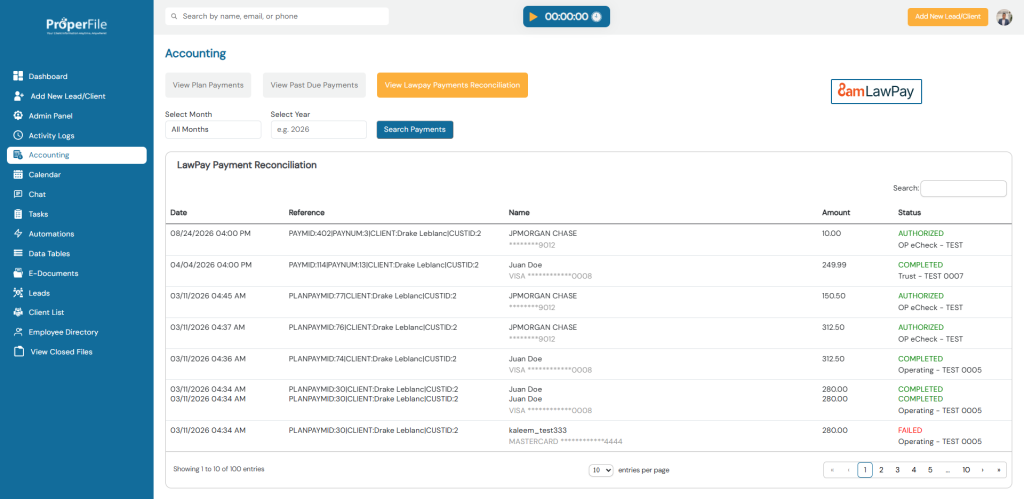
Integrated Reconciliation Dashboard
Track every paid, pending, voided, and refunded payment in one place. Look up a client’s full transaction history any time from the Accounting section’s LawPay Payment Reconciliation view.
No Equipment Required
Everything is done online, so there is no hardware to buy, install, or maintain. Just connect your LawPay account and start taking payments.
Email an Invoice, Get Paid Without Leaving ProperFile
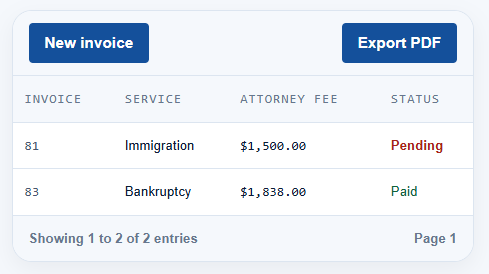
Send a client a professional invoice straight from ProperFile and let LawPay handle the collection. Once it is paid, the transaction shows up automatically in your reconciliation dashboard, with no extra data entry required.
Bank-Level Security on Every Transaction
ProperFile Payments are processed through LawPay, who are PCI compliant, so your firm and your clients are protected on every transaction.
Processed Through LawPay
Every payment is processed in the background through LawPay, who are PCI compliant.
What PCI Compliance Means
Payment Card Industry (PCI) compliance is required by credit card companies to make online transactions secure and protect against identity theft. Any merchant that wants to process, store, or transmit credit card data is required to be PCI compliant, according to the PCI Compliance Security Standard Council.
Your Card Data Is Never Stored by ProperFile
Credit card or bank account information details are stored by LawPay. ProperFile never stores any credit card or bank account information.
Start Collecting Payments Faster Today
See how ProperFile Payments, powered by LawPay, helps your firm get paid faster with less manual work.
Frequently Asked Questions
Is your site secured for processing payments?
Yes, in fact, payments are processed in the background through LawPay, who are PCI compliant.
What is PCI compliance?
Payment Card Industry (PCI) compliance is required by credit card companies to make online transactions secure and protect them against identity theft. Any merchant that wants to process, store or transmit credit card data is required to be PCI compliant, according to the PCI Compliance Security Standard Council.
Where is client credit card or bank account information data stored?
Credit Card or Bank Account information details are stored by LawPay. ProperFile never stores any credit card/bank account information.
What kind of equipment is required to process payments?
No equipment is necessary to process transactions, everything is done online.
What if I already have a LawPay account?
If you already have a LawPay account all you will need to do is connect your LawPay with ProperFile through the Administration Portal. Set up takes less than 2 minutes if you already have a LawPay Account.
What if I don't have a LawPay account?
You can sign up for an account directly with LawPay or you can start the sign up process through ProperFile. Simply click on the Sign up with LawPay button in the Administration Portal. You will be required to fill out a form which will then take you to LawPay to complete your application. Approval may take between 24 to 48 hours, however, once approved, you can connect your LawPay Account with ProperFile and start taking payments right away.
How do I find a client's transaction history?
You can look up any client’s transaction history in the Accounting section and clicking on LawPay Payment Reconciliation. Simply search the client’s name and the payment history will auto populate in the screen.